Little one, who bears up alone in such deep sorrow, never lose that strength or nobility, even when you grow up.
This anime, like Princess Tutu, doesn’t have a large animation budget, and as such, there are many shortcuts, with the most fluid cuts going towards the stock animation that’s repeated in just about every episode, and it also contains more than one recap episode (but we’ll get there when we get there).
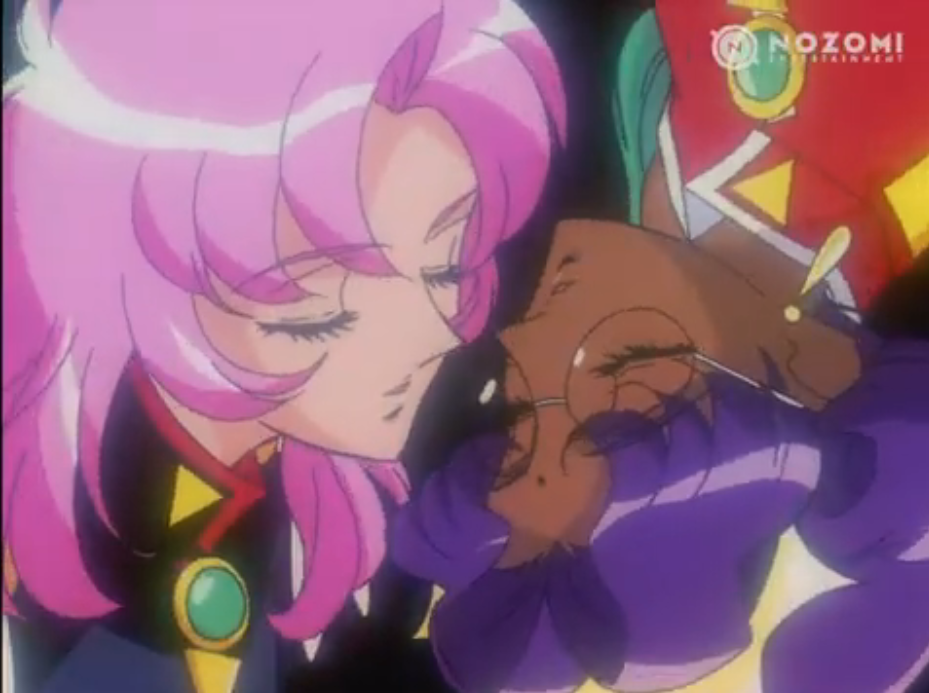
Anyhow, this first episode is storyboarded by Ikuhara himself, and hence sets the stage for the series, and in particular, the SYMBOLISM. Seriously, symbolism does a lot of heavy lifting in this show, which is one reason why it’s so hard to get through: It is very dense, if you want to take the time to interpret it properly.
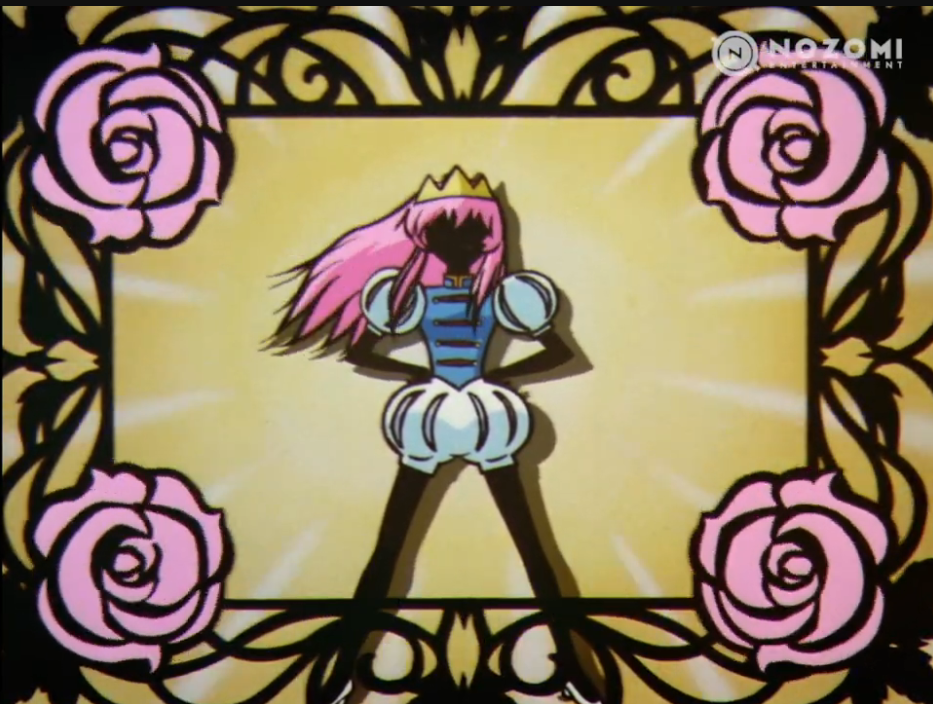
So let’s start with the rose borders (as on that first image), because roses are a constant motif. The first shot with such a border is one of a young Utena with red roses, presumably just to let the audience know that they’ll be important.
Once upon a time, years and years ago, there was a little princess, and she was very sad, for her father and mother had died.
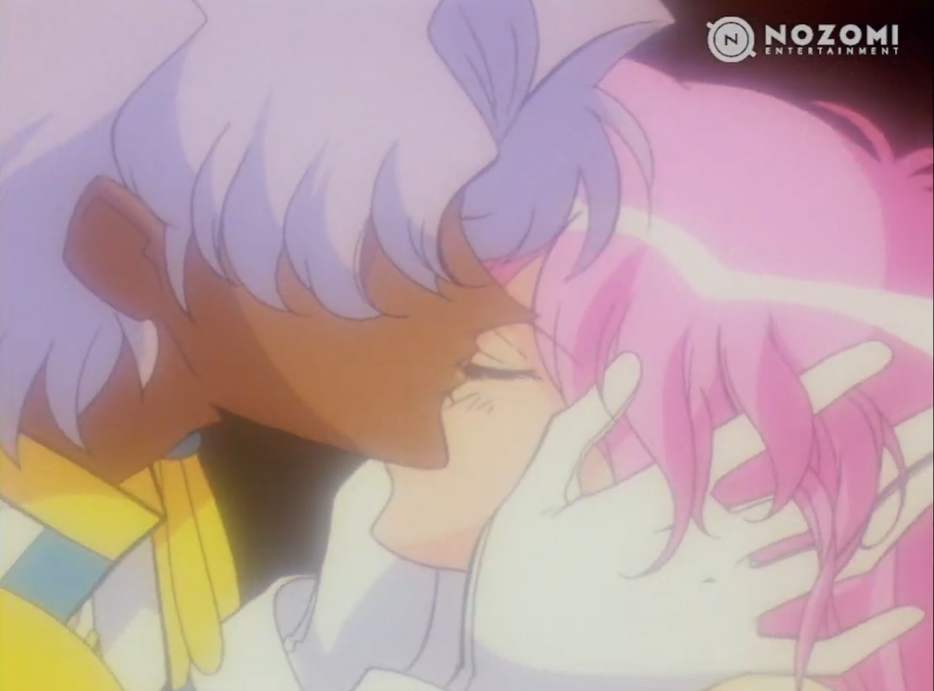
Before the princess appeared a traveling prince, riding on a white horse. He had a regal bearing, and a kind smile. The prince wrapped the princess in a rose-scented embrace, and gently wiped the tears from her eyes.
This is where the Paradise Lost references come in (right in the first scene). You see, in PL, Adam once dried Eve’s tears with kisses…but I’ll save the context of that scene for a more dramatically appropriate moment.
“Little one,” he said, “who bears up alone in such deep sorrow, never lose that strength or nobility, even when you grow up. I give you this to remember this day.”
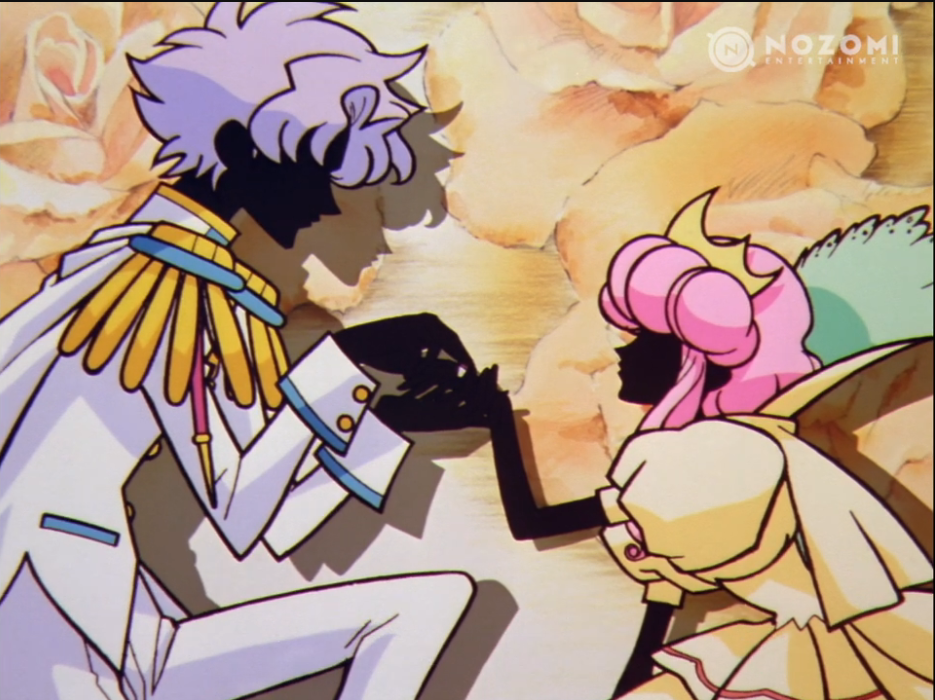
“We’ll meet again, won’t we?”
“This ring will lead you to me, one day.”
Then, as she’s watching him ride away, a white-rose border appears, associating white roses with the idea of the Prince.
Perhaps the ring the prince gave her was an engagement ring.
And finally, the pink roses appear (in the shot I placed at the top)…
That was all well and good, but so impressed was she by him, that the princess vowed to become a prince herself one day.
But was that really such a good idea?
I should probably mention Hanakotoba here, the Japanese flower language (which sometimes has very different meanings from the Western flower language). Although Utena generally has unique associations (mainly having to do with the characters), some of the symbology seems to be influenced by Hanakotoba, too. For instance, the white rose in Hanakotoba can represent innocence or devotion, both of which can be applied to Utena at times when she gets all “princely”. Similarly, while the pink rose is generally simply associated with Utena, in the flower language it can represent “confidence”, which is similarly apt (especially compared to the Western flower language: “grace”).
Also, note that this isn’t Utena narrating the prologue, but rather some girls who are technically characters, but mostly just serve as narrators or thematic expositors.
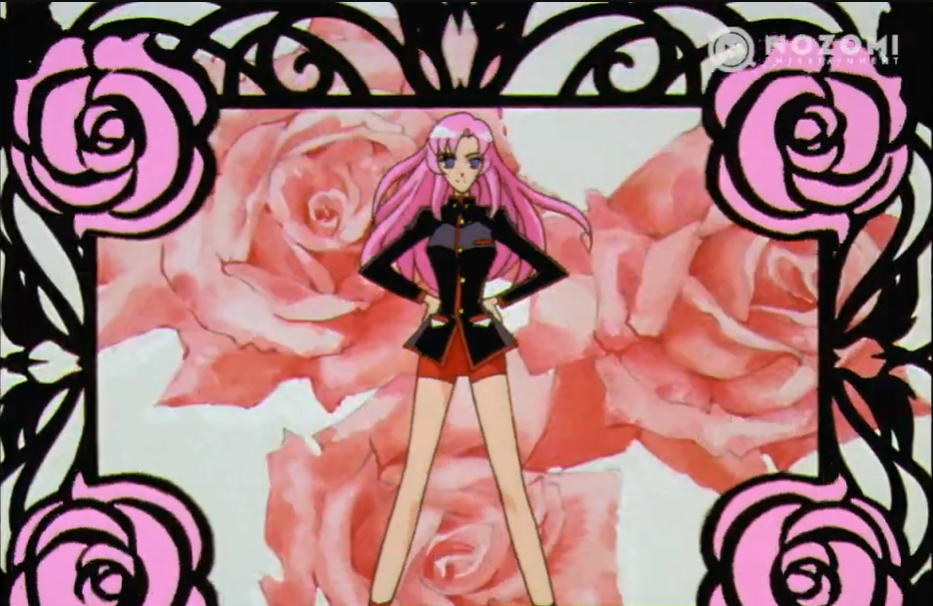
Fast-forward to the present, and Utena Tenjou is sporting the boy’s uniform (which she justifies with the old “there’s no rule against it” bit). She’s in middle school at the beginning (fourteen years old, the same as Usagi from Sailor Moon). In one of the opening scenes, she trounces the basketball team at their own game.
Basketball Team Captain: C’mon, Tenjou. If you join my basketball team, winning the regionals would be easy!
Utena: Excuse me, I happen to be a girl! I’d be embarrassed to get all covered with smelly boys’ sweat!
Captain: Oh, come on! You act like a guy anyway, Tenjou!
Utena: Would you quit insulting me?!
Captain: So, then, why do you wear that uniform?
Utena: To be a prince. I want to be a noble prince who saves princesses.
Now we get to one of the great debates surrounding the show: Is Utena a trans boy? There are arguments to be made either way, and I’ve seen many trans men that took inspiration from this show, and that’s great! But at the end of the day, I personally relate to Utena as a girl wrestling with her sexuality, not her gender identity, although that does also involve engaging with prescribed gender roles. She believes she needs to be a “prince” in order to protect “princesses”, so she signals that in her choice of uniform.
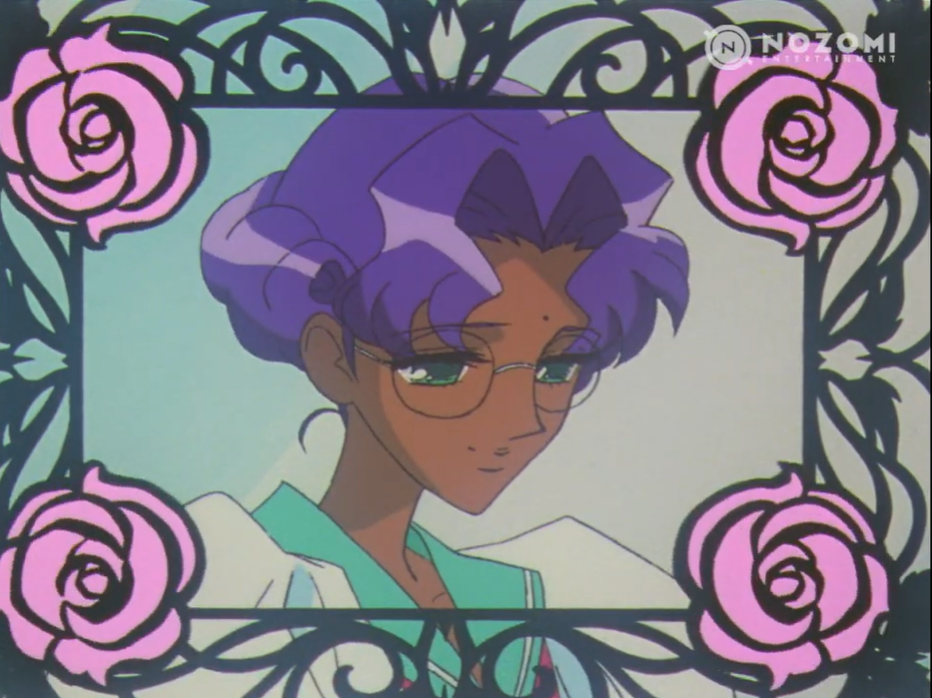
Anyway, on to the plot! This is Anthy Himemiya (“hime” notably means “princess” in Japanese), and the pink roses are there presumably to highlight that she’s caught Utena’s attention.
Utena passes by the rose garden she’s tending.
Utena: The scent of roses…why does the scent of roses always make me think of the past?
This is the first indication that Utena doesn’t clearly remember the scene from the prologue…
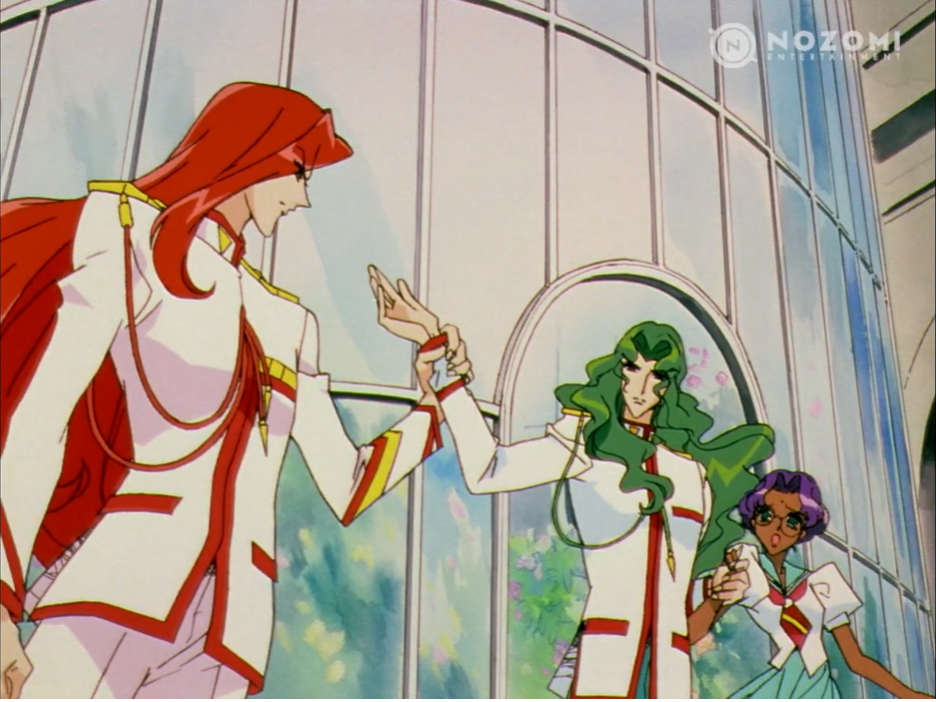
Then we meet this lovely gentleman, Kyoichi Saionji (green hair), who pretty obviously has an abusive relationship with Anthy, but Touga Kiryuu (red hair) swoops in to stop him when he’s hitting her (notably, this event is framed with white roses).
And then Utena discusses this with her “girlfriend” Wakaba (at least she calls Utena her “boyfriend”, mostly teasingly).
Wakaba: [Anthy]’s weird. She just keeps to herself and takes care of the roses. We’ve got her in our class this term.
Utena: So, is Saionji going out with Himemiya or what?
Wakaba: No way! Someone as cool as Saionji would never fall for a girl like that! They’re just together because they’re both on the student council.
Utena: So, is that the type you fall for, Wakaba?
Wakaba: Oh, wow! Are you jealous? Don’t worry, you’ll always be my true love, Utena! You’re way cooler than any of those guys can be!
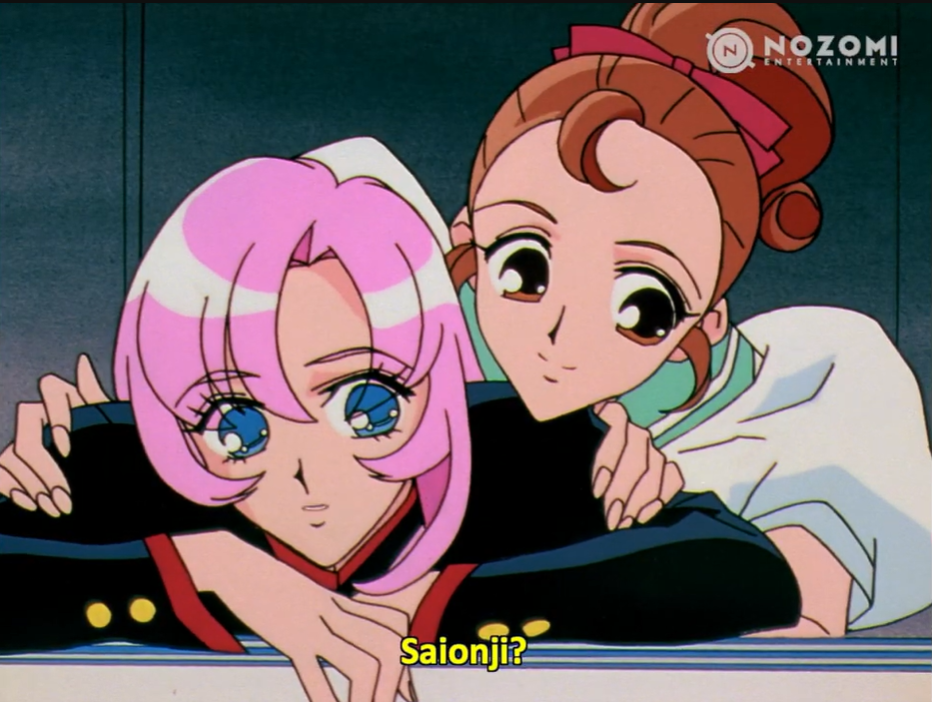
So one must assume that Saionji and Anthy aren’t publicly a couple, but Wakaba is pretty clearly in denial as well.
Also, just as an aside, the character’s last names will be used about as often as their first names (in Japan, only friends tend to use their first names)…but Touga is pretty much the only character that calls Saionji by his first name, so he’s basically just Saionji.
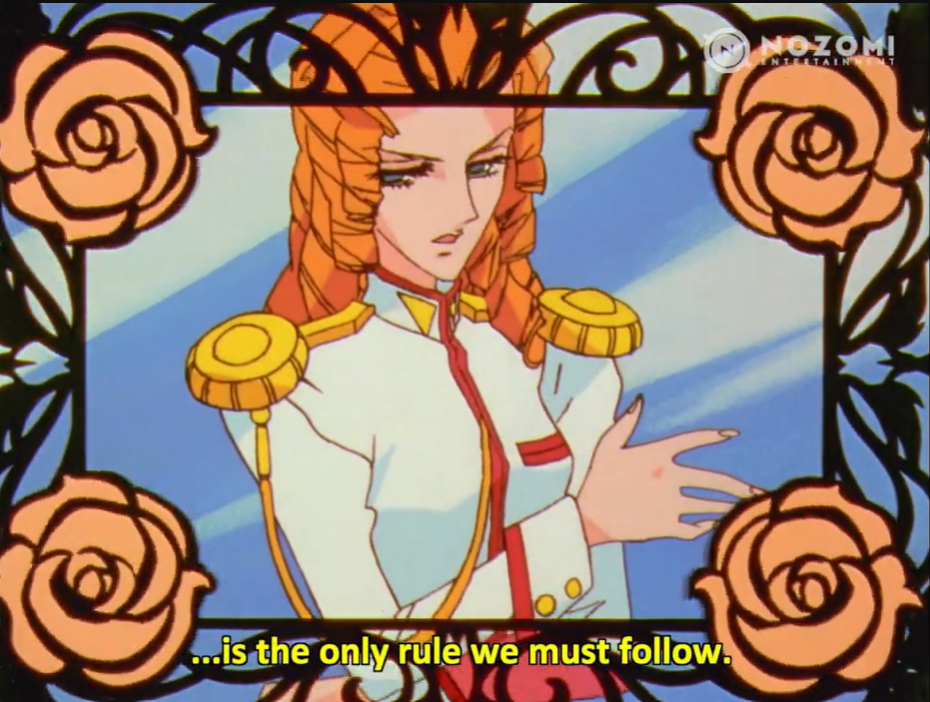
Next, we’re introduced to the rest of the Student Council (Saionji, Anthy, and Touga are all members): Juri Arisugawa (shown here) and Miki Kaoru (he has blue hair, and hence blue roses). Intriguingly, the orange and blue roses seem to have their meanings flipped, but that’s a conversation for another episode.
Miki: Saionji-san, we who wear the Rose Seal are all chosen members.
Juri: Don’t forget that adhering to the Code is the only rule we must follow.
Touga: Saionji, your treatment of the Bride recently is causing us some concern.
Saionji: Oh? Is that so?
Touga: True, you are currently engaged to her, but that doesn’t mean you’re free to treat her as you please.
I’m opting to include honorifics whenever possible, because as a show translated in the 90’s, the official subtitles obviously assumed the viewer would have little familiarity with Japanese and hence just rephrased those lines. But it adds context, like how Miki, a younger student, refers to him as “Saionji-san” but Touga omits the honorific because he’s technically of higher rank (the president vs. VP).
Anyhow, we’ll hear more about these “rules” as the story progresses, but for now the point is that they take issue with Saionji’s abuse and…he’s apparently engaged to Anthy.
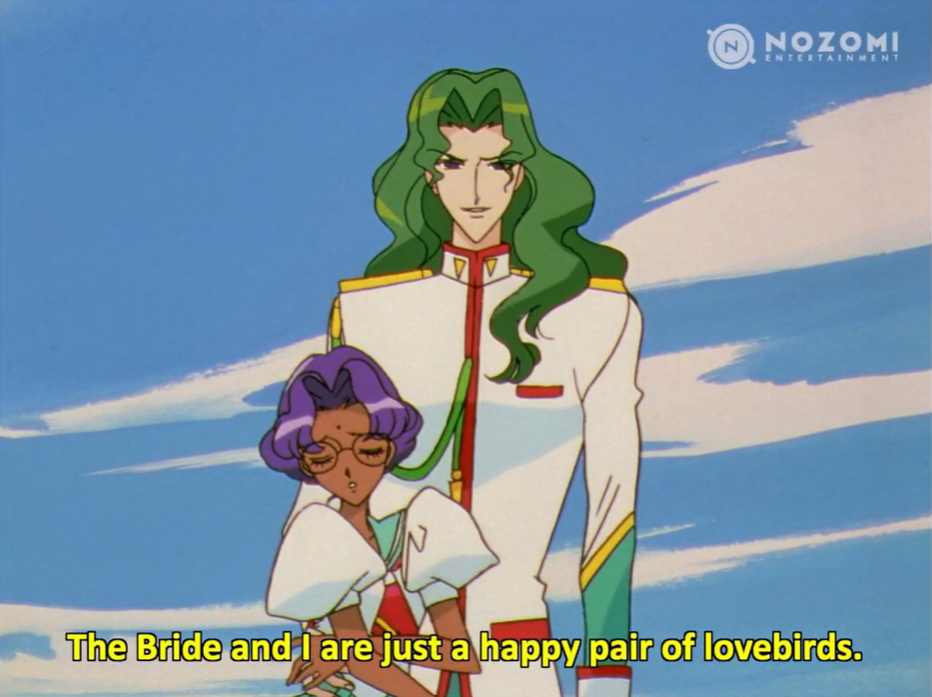
Touga: Don’t abuse the Bride, Saionji. The student council exists by the will of End of the World. If he learns of this, he won’t let it go lightly.
Saionji: Mind your own business. The Bride and I are just a happy pair of lovebirds. We don’t want you meddling in our affairs.
Anthy: For now I am…Saionji-sama’s bride. I will do whatever Saionji-sama tells me to do.
Saionji: See what a nice couple we are? And if you’re so concerned about the Code of the Rose Seal, then you may follow the Code and duel with me for the Bride, my fellow council members.
Yes, Anthy is the titular Rose Bride, who is evidently engaged to whoever “wins” her in a duel. Yes, this blatant objectification will be interrogated. Also, note that “-sama” is sometimes translated as “Lord” or “Lady”, and sometimes (like here) as “Master” or “Mistress”. Touga also mentions that they’re expecting a new Duelist to appear…
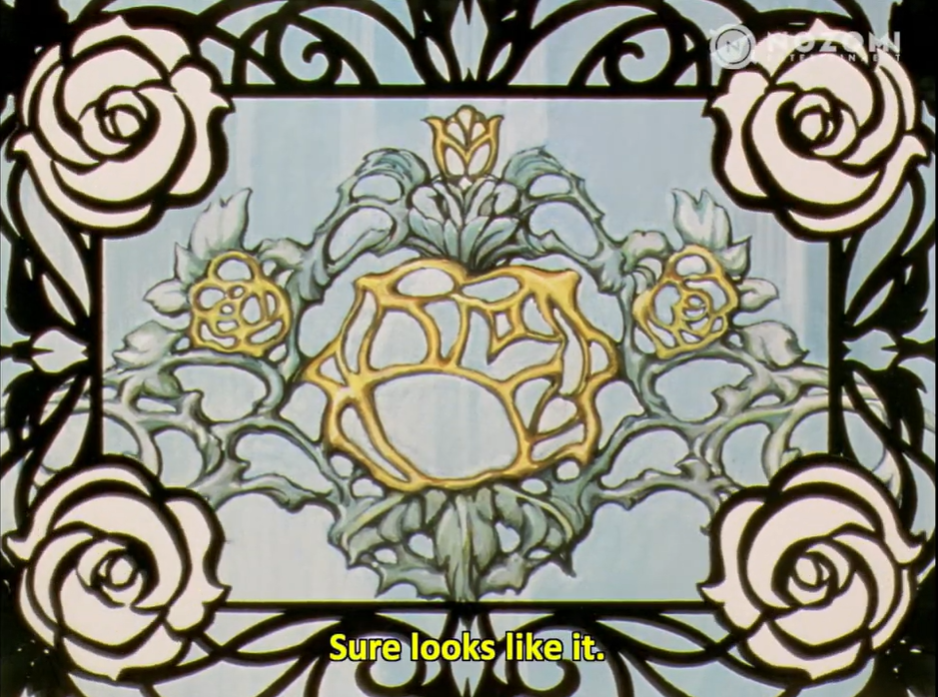
Utena and Wakaba briefly discuss her ring, and note that it bears what appears to be the crest of their school, Ohtori Academy.
Wakaba: Who gave it to you?
Utena: A prince on a white horse. […] “This ring will lead you to me, one day.”
Wakaba: What do you mean?
Utena: I remember someone saying that to me when I got it. I was so young that I can hardly remember it.
This implies that the prologue is just a hazy memory for her…
Then she gets involved with the plot when they see a bunch of guys congregated around a love letter posted on a public bulletin board.
Boy: “And so, I dance with you in my dreams, dear Saionji. You smile at me gently. I guess I’m a fool…”
Utena: You’re the fools!
Boy: What’s wrong with reading something that’s tacked up?
Utena: In this case, a real man wouldn’t read it!
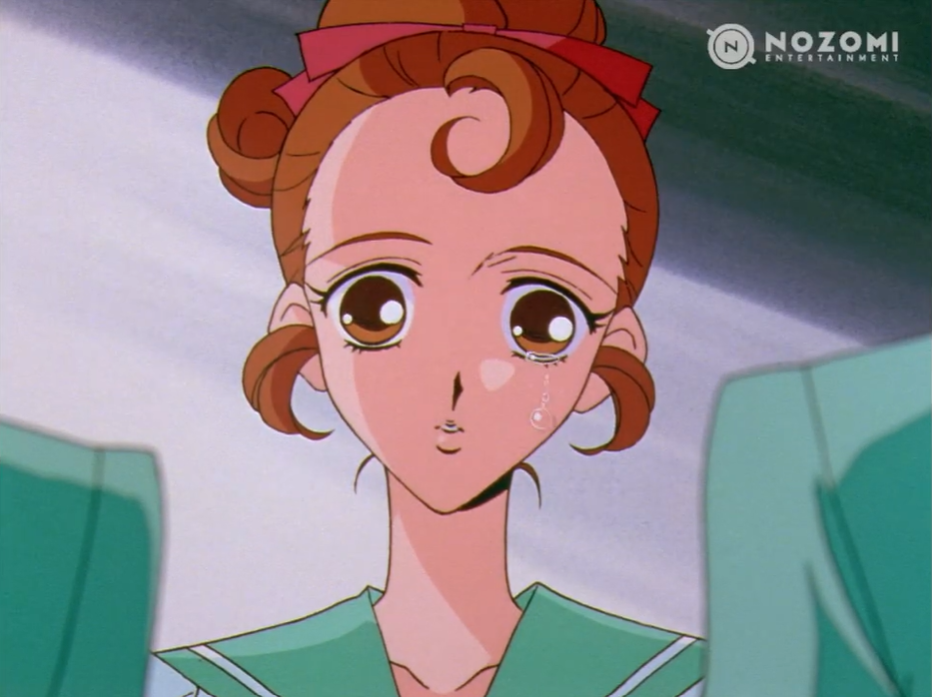
because of course that was wakaba’s letter
Naturally, Utena’s furious at her friend’s humiliation – even if her name wasn’t on it, she still had to endure the boys making fun of her feelings, and on top of that, it’s ALSO how she finds out she was rejected!
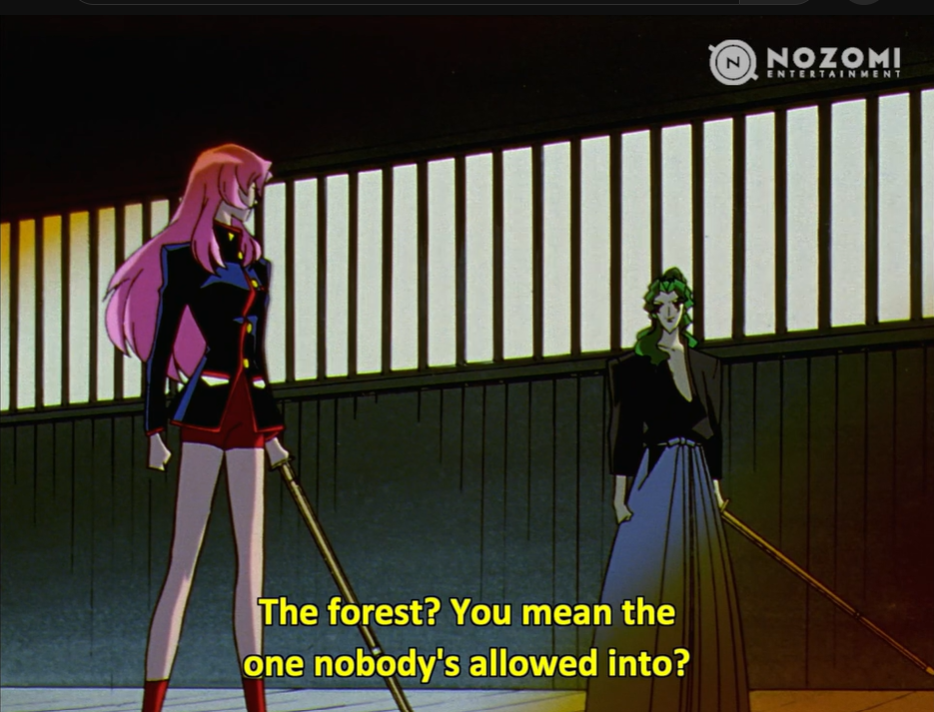
So of course Utena confronts Saionji about it.
Utena: Why’d you throw it away where other people could find it?!
Saionji: I can do whatever I want with my own letters. Oh, I remember. For that incredibly stupid- I mean, for that cheerful letter, the best thing to do with it was use it to give everyone a nice laugh. Is that all you wanted to say?
Utena: No. You’re the Kendo team captain, aren’t you? I want a duel with you today after school!
Kendo is a Japanese martial art descended from Samurai sword exercises which uses bamboo blades. And thus Utena becomes a forebearer of idiot heroes everywhere who challenge people to duels they have little chance of winning to defend a friend’s honor! (at least she doesn’t wager her future education or anything).
Naturally, however, Saionji assumes that Utena is the new duelist, so he invites her to the secret arena for the duel, because of course they have a secret arena for duels in this school.
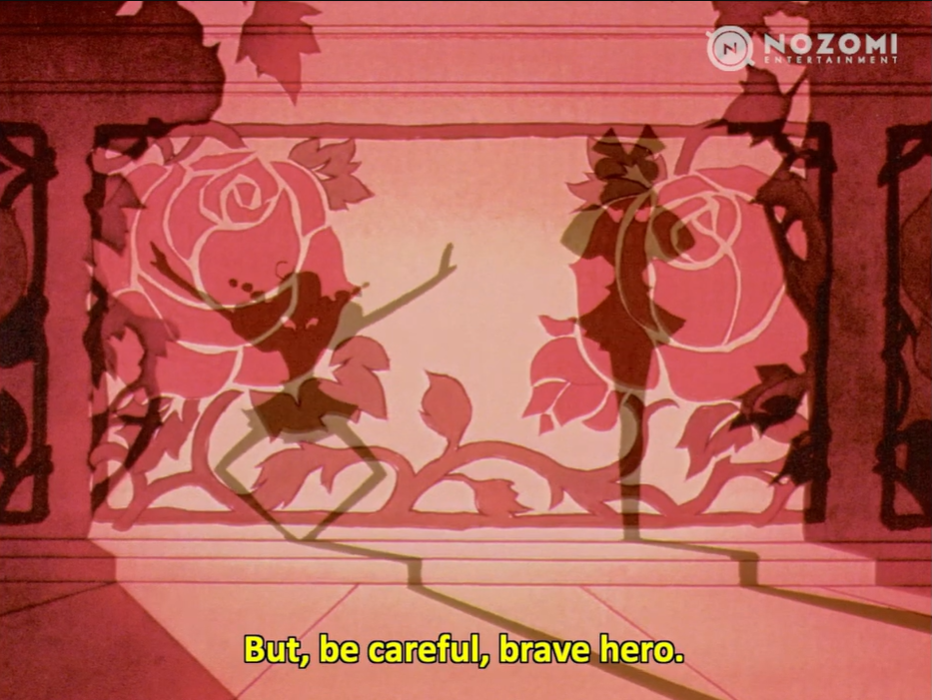
And thus we are more or less formally introduced to the Shadow Players (who were also the narrators in the prologue), doing their shadow thing and generally acting as the Greek chorus.
Girl A: I wonder, I wonder, do you know what I wonder? There’ll be another duel today in the forest behind the school.
Girl B: Oh, brave hero! Brave hero who fights for her friend’s sake…
Girl A: But be careful, brave hero.
Girl B: They follow a Code in the forest.
Girl A: I wonder if you know that?
Both: I wonder, I wonder, do you know what I wonder?
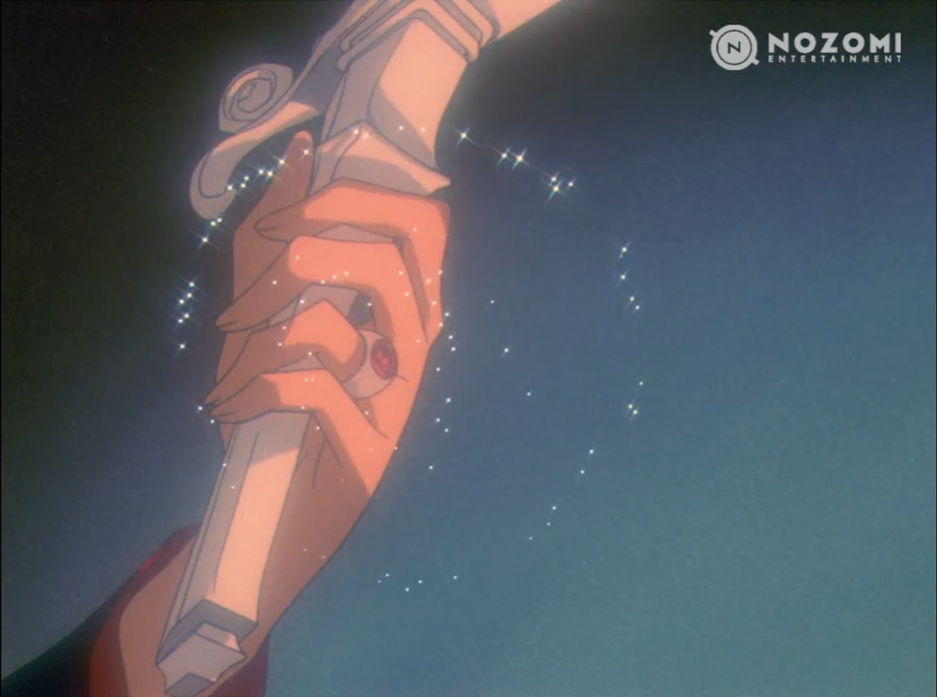
But it’s not just any secret arena, it’s a secret arena that’s also apparently MAGICAL. And has its own epic theme song.
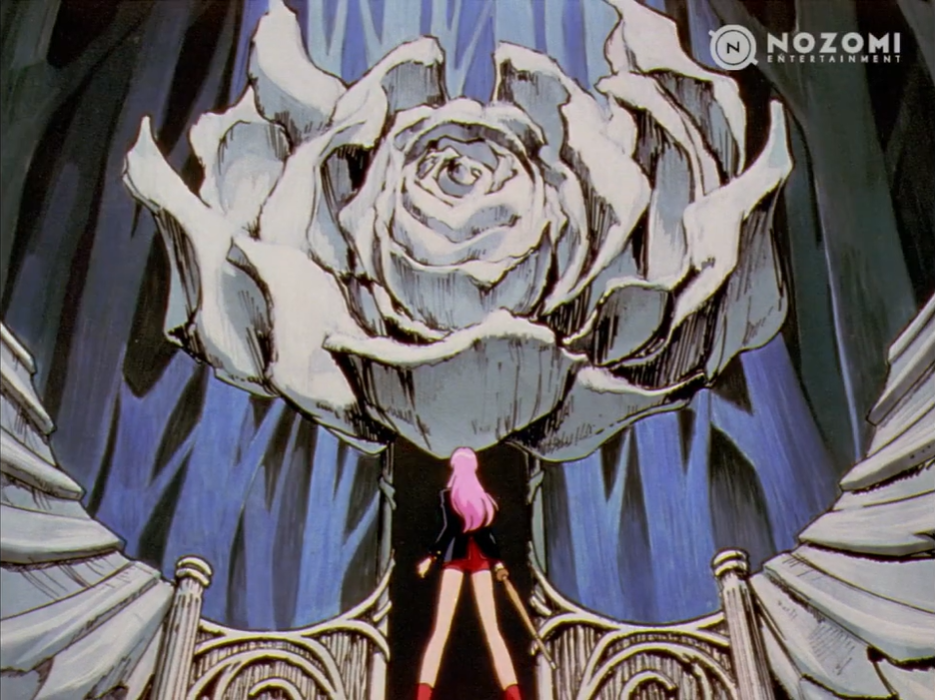
Absolute destiny apocalypse
Absolute destiny apocalypse
Birth records, baptismal records, records of death
A shining place in a desert of darkness
A gold-plated Shangri-La
Day and night turning back on one another
A time-plated Paradise Lost
The darkness of Sodom, the darkness of light
The darkness of distance, the endless darkness
The absolute destiny apocalypse
The absolute destiny apocalyptic darkness
See? That’s a very conspicuous reference to Paradise Lost, a Christian paradise, alongside a reference to Shangri-La, a mythical Buddhist paradise. And it’s surrounded by apocalyptic imagery (needless to say, the reference to Sodom is relevant as well).
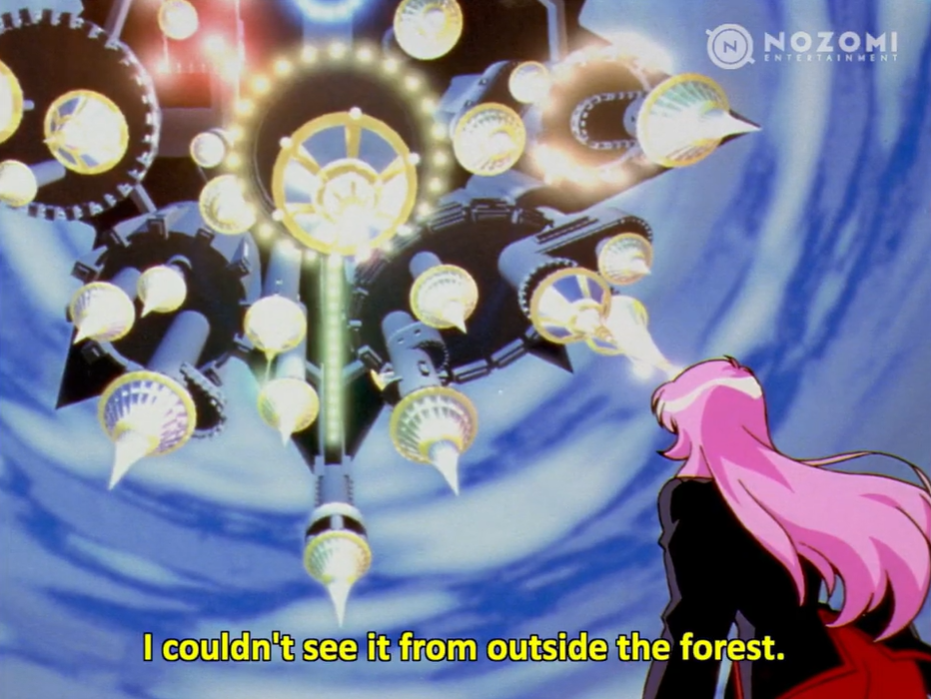
And in the arena there is what appears to be a floating castle…
Saionji: That’s right, you’ve never seen the castle before, have you?
Utena: What is that thing? I couldn’t see it from outside the forest.
Saionji: A kind of mirage. Think of it as a trick of the light.
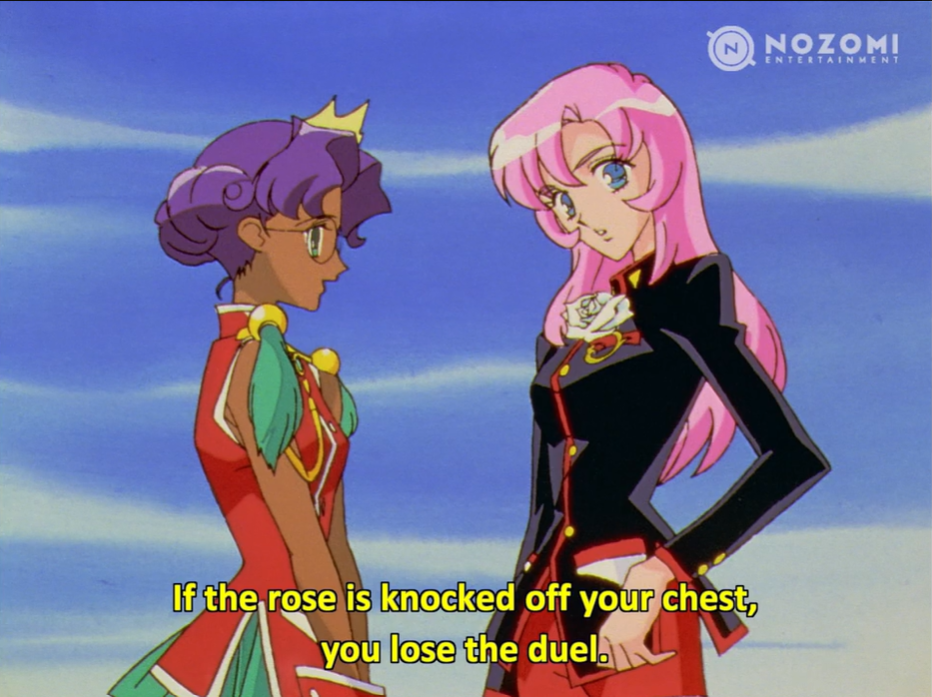
And naturally, Utena’s confused to see Anthy here, because she thinks this is all about Wakaba.
Saionji: It’s the Bride’s place to be here, so she’s here.
Utena: Bride?
And then she notes that Anthy smells of roses, just like her Prince…
Anthy: If the rose is knocked off your chest, you lose the duel. Good luck.
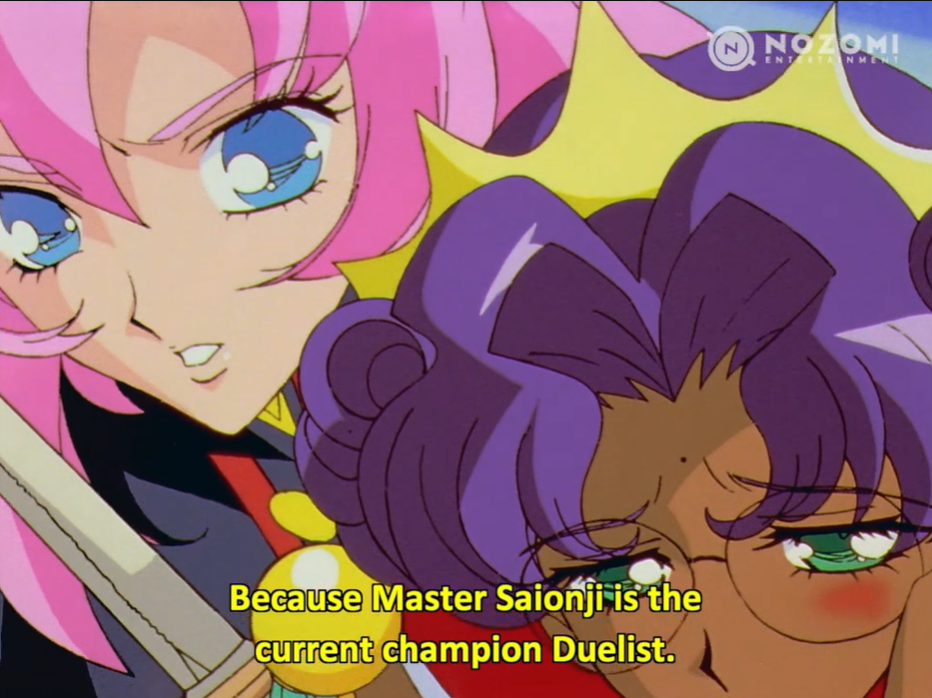
and then saionji hits her again
Saionji: How dare you, Anthy! You are the Rose Bride! In other words, you’re my flower! What’s the meaning of you wishing good luck to someone else?
Anthy: Forgive me, Saionji-sama.
Utena: Are you nuts? Why would you take that from this guy?!
Anthy: Because Saionji-sama is the current champion duelist. I have to do whatever he wants me to.
Utena: What do you mean? You’re not his girlfriend?
and if you think that’s the sort of situation ripe for abuse, you’re not wrong
But this also triggers Utena’s instinct to protect a “princess”.
Utena: I don’t know what’s going on here, but I just have to beat him, right?
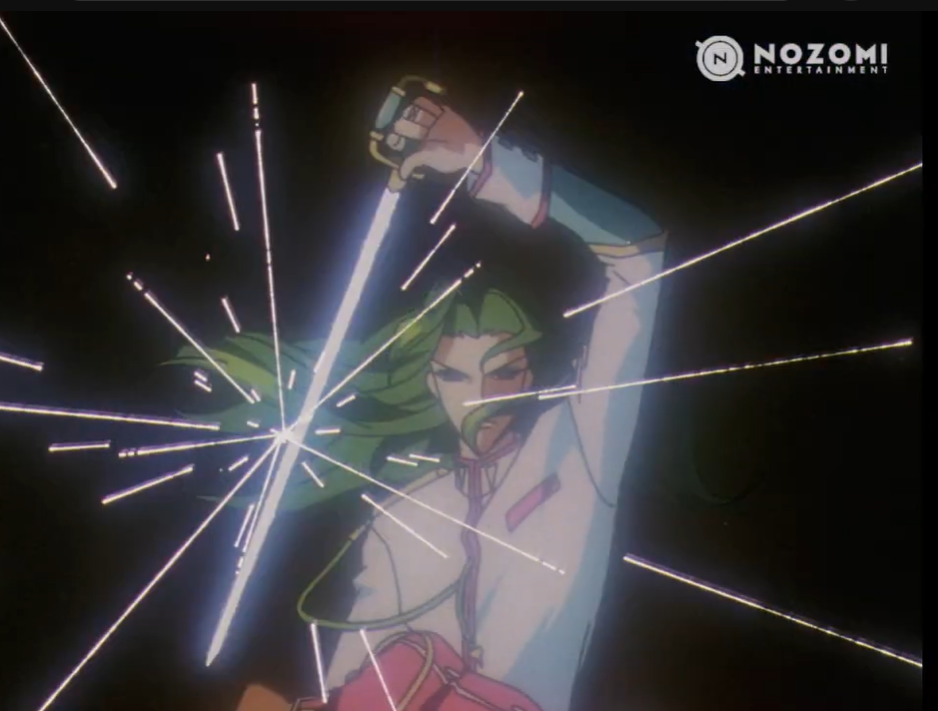
And then Saionji seemingly just DRAWS A SWORD OUT OF HER CHEST.
Anthy: Rose of the noble castle, power of Dios that sleeps within me, heed your master and come forth!
Saionji: Grant me the power to bring the world revolution!
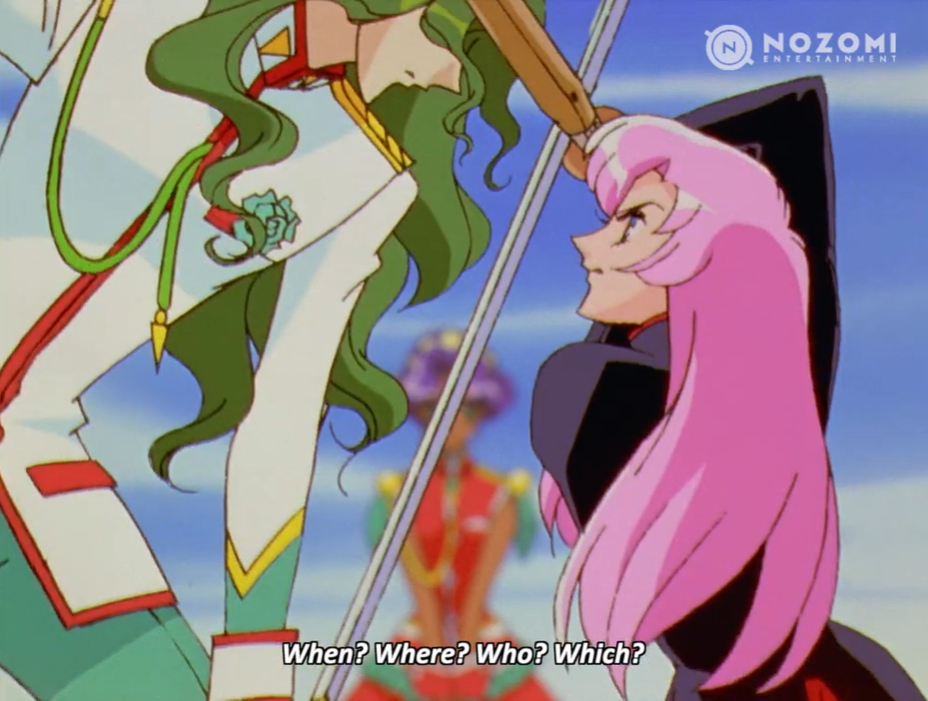
Saionji wears a green rose, which doesn’t actually exist in real life (a rose is only green in the bud), but that represents his immaturity well. Notably, Utena doesn’t wear a pink rose, but a white one, representing her princely goal.
But Utena is surprised to find that Saionji’s “trick sword” is actually a REAL sword, which Utena struggles to defend against with the traditional bamboo Kendo blade.
Saionji: You’re pretty good, for a girl! So, trying to be a prince who saves the damsel in distress?
One upside to the limited animation is that I can actually capture what the duels look like in screenshots!
After Saionji has already cut the bamboo blade, they both charge…
Saionji: You don’t know about the Sword of Dios? Who are you? Now you’ve got me interested.
Utena: The duel isn’t over yet!
Saionji: Quite right. If you wish, I’ll cut that rose from your chest with a single stroke. You had the courage to come and face me, after all. The prince on a white horse, here to save the princess!
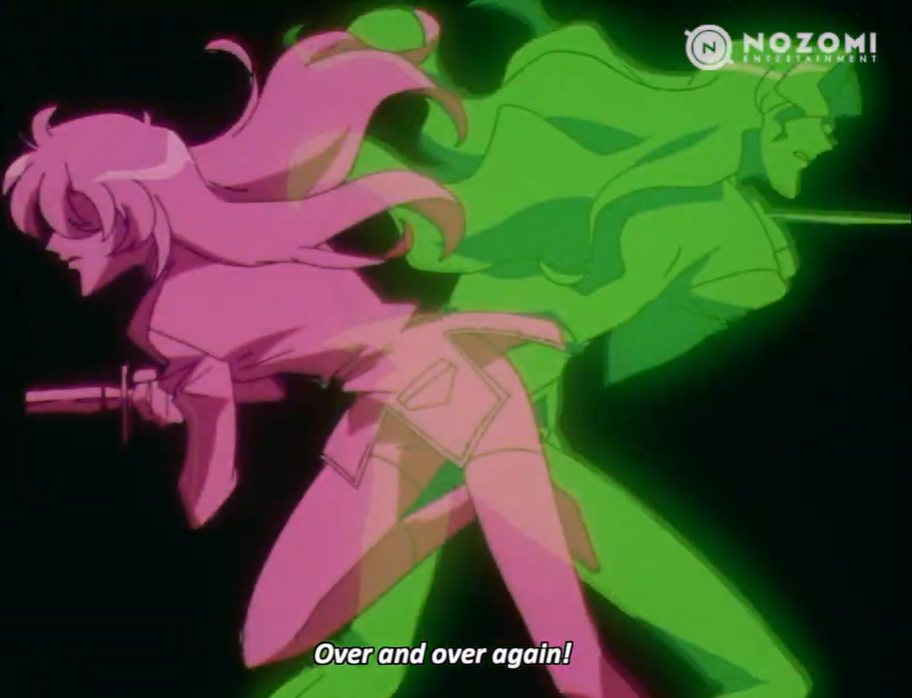
The Sword of Dios is the one he drew from Anthy…but they just have to knock a rose from their opponent’s chest, and that can be done just as easily with bamboo as with a real sword.
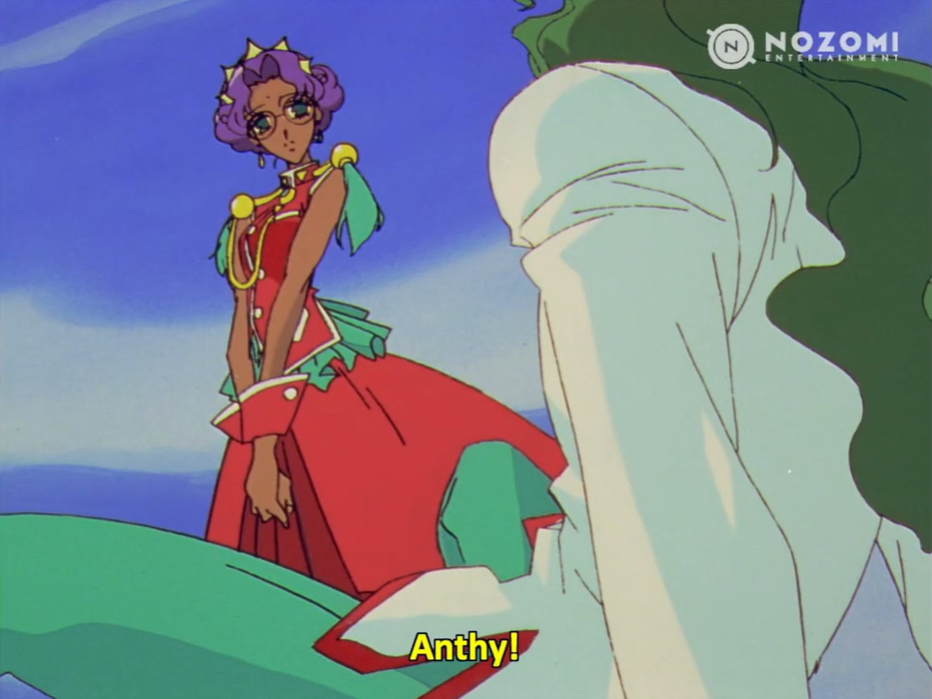
Surprisingly, Utena actually wins!
Saionji: Impossible! I…lost? Anthy!
Anthy: Cheer up, Saionji-senpai
He’s clearly shocked by the loss, and Anthy is quick to (politely) rub it in his face by immediately changing his honorifics. And Touga was watching the duel with great interest from the sidelines.
Utena: Man, this has been one truly weird day. What was that all about? Better to just forget about it.
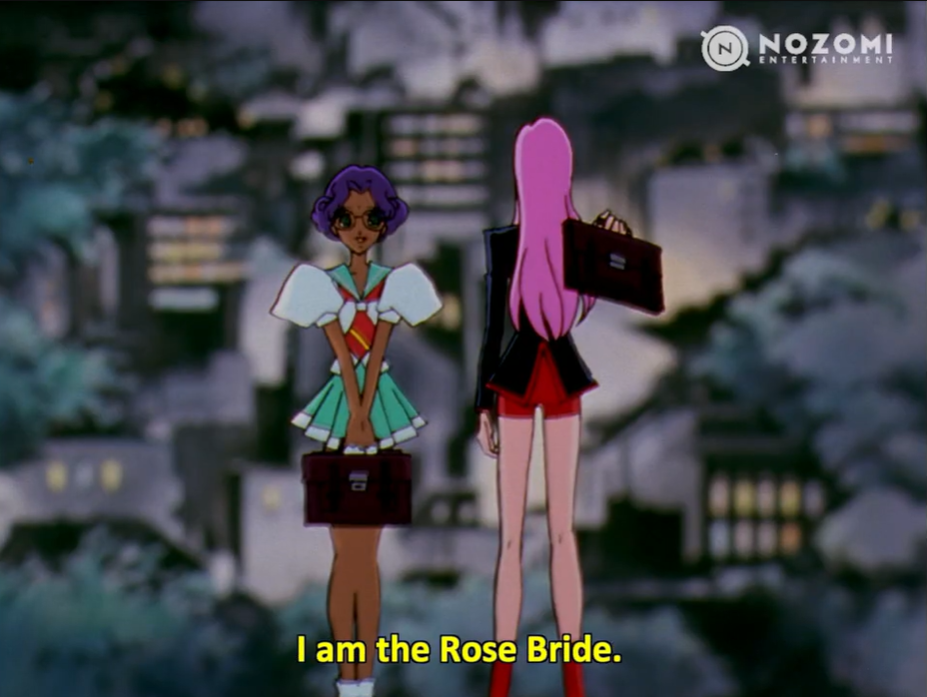
But of course, this is only the first episode.
Anthy: I’ve been waiting for you, Utena-sama. I am the Rose Bride. From this day forward, I am your flower.
Notably, the word for “bride” used here includes the Japanese word for “flower”…and the motif of flowers and swords are intentionally suggestive. But we’ll get into that later.
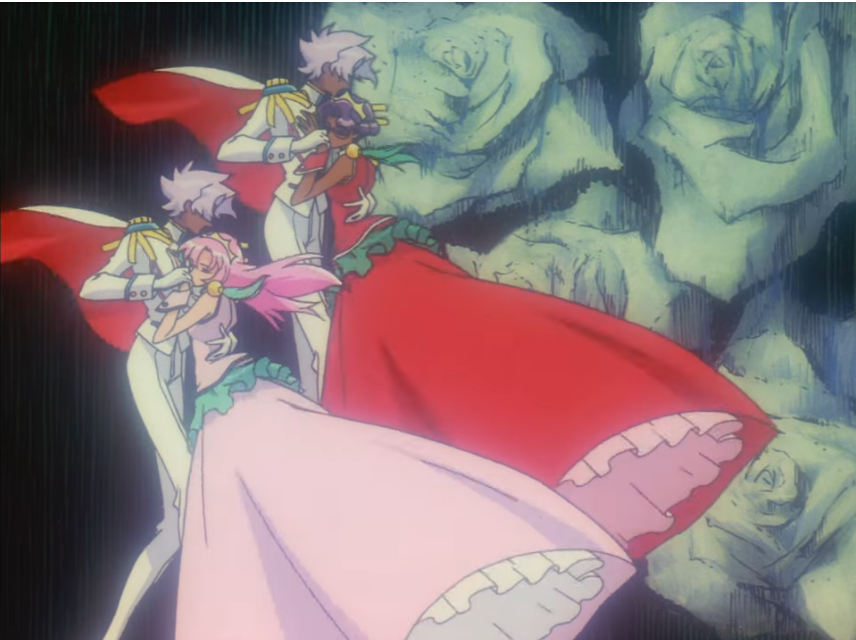
Also, while I appreciate that this show is free on Youtube, for some reason, they include the ending song, but not the end animation, so you’d have to look that up separately, but it does include some interesting imagery, seemingly implying that Utena and Anthy are in competition for the Prince. Then they don’t even change the ending theme in the last arc, but we’ll get there when we get there.
Until next time…
 Eucatastrophe